Case studies

Systems we have built for mid-market firms, most often where documents, reviews and approvals move in volume. Each entry covers the problem, what we built, and what the system does day to day. Most of this work sits in financial services, legal and professional services.

Financial services

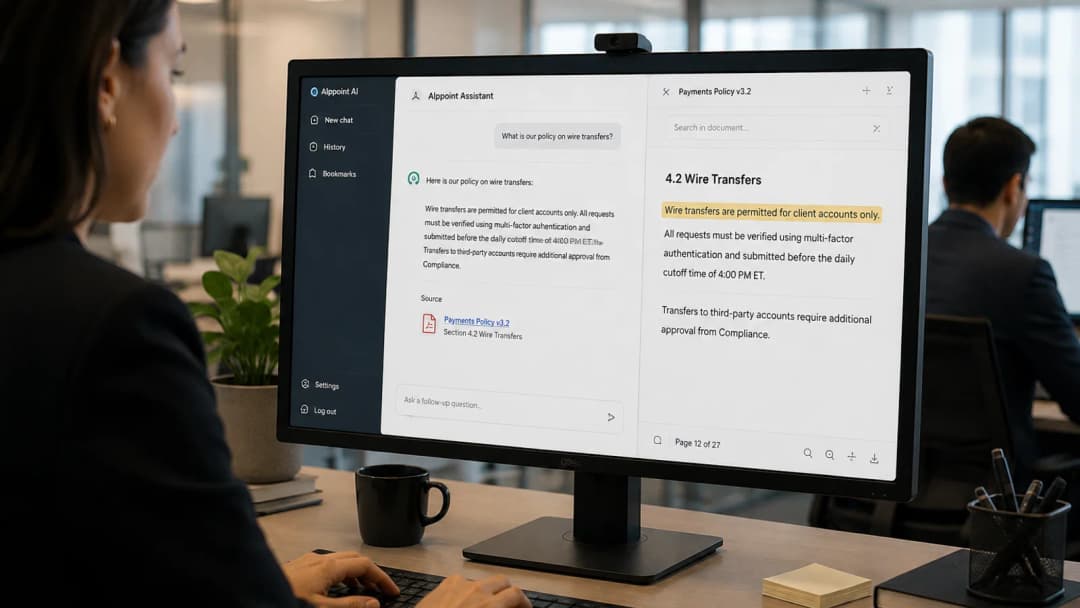
Answering policy questions from a firm's own documents

A financial services firm gave staff an assistant that answers policy questions in plain language, with every answer citing the compliance document it came from.

The problem

Policies, moving regulations, and a steady flow of staff questions meant teams spent their time searching documents, interpreting them, and escalating what they could not resolve.

What we built

A compliance assistant that answers from the firm's own policies and regulatory guidance, reachable in Slack, Teams, or the browser.

What it does

  • Answers repeat policy questions from the current documents, not an older copy
  • Cites the source passage on every answer so a reviewer can check it
  • Keeps a record of what was asked and answered

Read the full case study: Answering policy questions from a firm's own documents
Technology

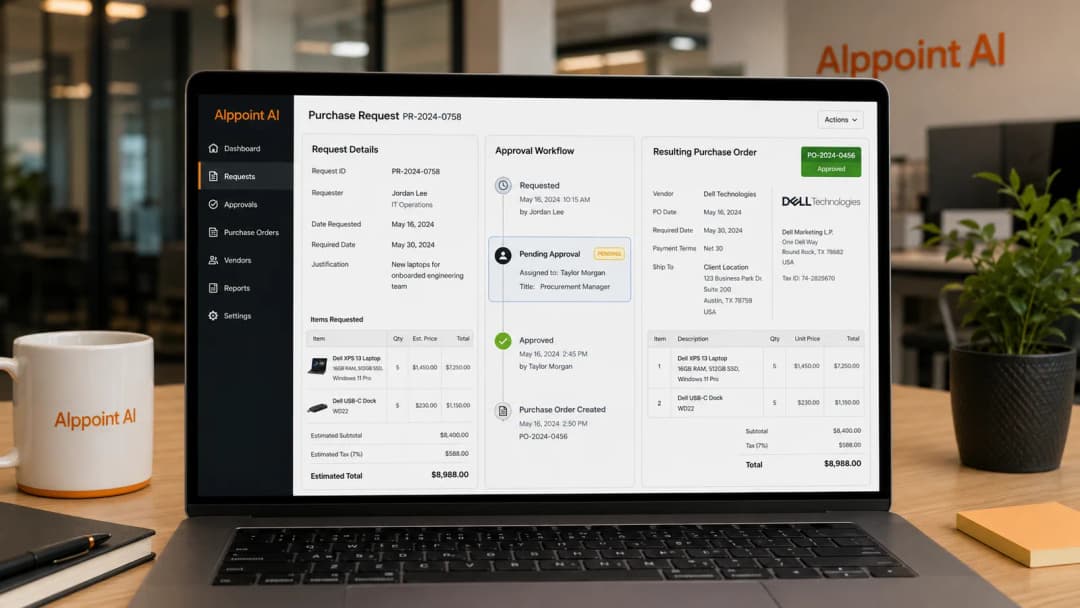
Bringing fragmented procurement into one workflow

A technology company of more than 500 people replaced disconnected purchase requests, informal approvals and separate records with one procurement workflow it owns.

The problem

Purchasing ran in disconnected parts: requests in one place, approvals in another, records in a third, so ordinary questions could not be answered without chasing someone.

What we built

A procurement system built around the company's own purchasing process, covering requests, approval routing, supplier records, purchase orders and spend visibility.

What it does

  • Routes a request to the right approver and records the decision
  • Shows the state of any request without anyone having to ask
  • Makes committed spend visible in one place

Read the full case study: Bringing fragmented procurement into one workflow

Technology

Finding and governing the AI systems already running

A technology company of about 400 people replaced scattered, unowned AI activity with one place to see which systems exist, who owns them and what they can reach.

The problem

AI was spreading across cloud platforms, code repositories, identity systems and model providers, with no consistent answer to which systems were running or who owned them.

What we built

An AI layer over the security tooling the company already ran, covering discovery, risk assessment and a review that goes from request to sign-off.

What it does

  • Finds AI activity across cloud, repositories, identity and model providers
  • Carries a review from the request to the sign-off
  • Tests AI systems before they reach production

Read the full case study: Finding and governing the AI systems already running

Healthcare

Governing AI across a healthcare environment

A US healthcare organization built one way to find its AI systems, assign ownership, and check each one against its own sensitive-data boundaries.

The problem

AI was spreading across internal applications, cloud services, identity systems and external model providers, with no dependable inventory of what existed or who owned it.

What we built

An AI posture system that checks every system it finds against the organization's sensitive-data boundaries, access controls and governance rules.

What it does

  • Shows which AI systems touch sensitive information
  • Applies the organization's own governance rules as one consistent check
  • Replaces a case-by-case judgement that changed with who asked

Read the full case study: Governing AI across a healthcare environment

Financial technology

A governed operating layer for AI at a fintech

A US fintech company brought AI running across engineering, cloud infrastructure and customer-facing systems into one governed operating layer.

The problem

Without one operating layer, nobody could say reliably which AI systems were active, which had been reviewed, or which issues were still open.

What we built

One workflow joining discovery, governance, security testing and runtime control, built around the engineering stack the company already had.

What it does

  • Gives AI shipping from several teams one point where it is checked
  • Tests systems before production rather than after something goes wrong
  • Tracks open issues through to remediation

Read the full case study: A governed operating layer for AI at a fintech

Financial services

Putting an owner against every AI system in a bank

A Canadian financial institution replaced a partial view of its AI estate with one governed record of what runs, who is accountable, and what remains open.

The problem

The existing security and asset tools captured parts of the estate but gave no single operating model for AI, leaving basic accountability questions unanswered.

What we built

One register of the AI estate, holding ownership, access, review state and open risks where the institution's existing tools held only fragments.

What it does

  • Puts a named business or technical owner against every system
  • Records which systems have completed review and which have not
  • Shows what information each system can reach

Read the full case study: Putting an owner against every AI system in a bank

Professional services

Capturing senior consultants' knowledge in an internal assistant

A consulting firm made the knowledge held by its senior people searchable by everyone, using the playbooks and templates they had already written.

The problem

Guidance on billing, formatting standards, and client handling sat in shared drives and old email threads, or with a few senior people.

What we built

A policy and operations assistant that answers from the firm's playbooks, guides, and templates, with a link to the document behind each answer.

What it does

  • Links straight to the template or document behind the answer
  • Filters answers by role, so an associate and a partner each see what applies
  • Keeps guidance available when its author is not

Read the full case study: Capturing senior consultants' knowledge in an internal assistant

Legal services

How a legal services firm automated case brief summaries

A legal services firm turns dense client documents into structured briefs a lawyer can check against the source, with the tone and audience chosen per brief.

The problem

Pulling insight from contracts, discovery documents, and regulatory texts into a client-ready deliverable was manual, slow, and inconsistent between people.

What we built

A brief generator that takes uploaded case material and returns a structured summary in the chosen tone, from contract analysis to research debriefs.

What it does

  • Extracts the action items, risks, and dates rather than paraphrasing at length
  • Applies the same structure to every brief, whoever prepares it
  • Processes confidential material under the firm's own security controls

Read the full case study: How a legal services firm automated case brief summaries

Financial services

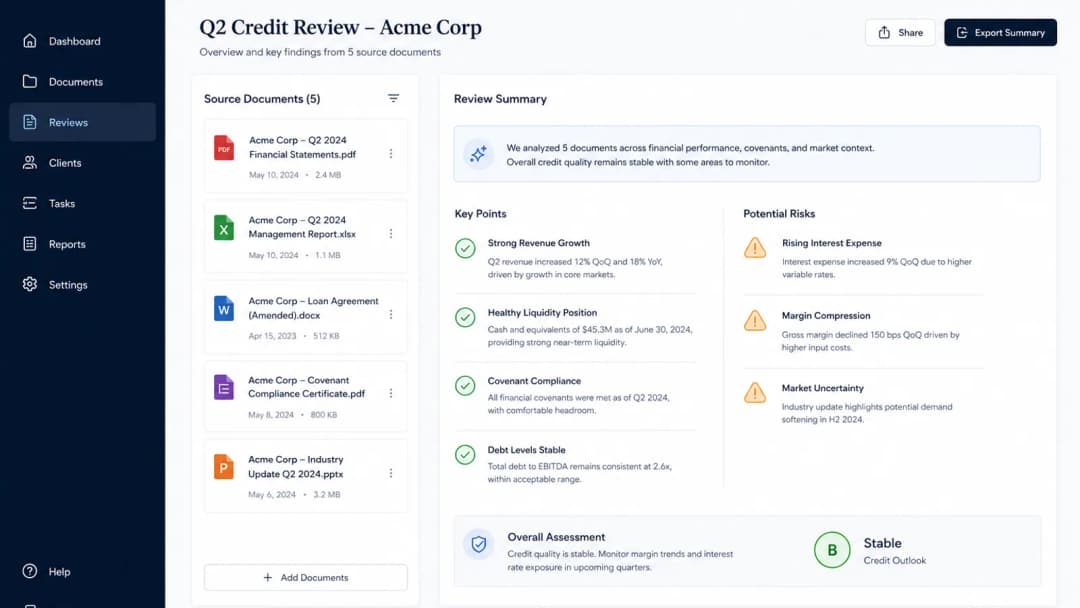
Assembling review-ready summaries from source documents

A financial institution uses AI to summarize dense source documents and assemble the evidence set its reviewers work from during audit preparation.

The problem

Condensing investment reports, filings, and risk analyses into something a reviewer can read pulled experienced staff away from the judgement calls only they can make.

What we built

A summarization tool that takes a single report or a multi-document pack and returns the key points, risks, and recommendations in the requested format.

What it does

  • Summarizes each document into a brief a reviewer can check against the original
  • Assembles the evidence set for a review pack in one place
  • Handles a multi-document pack in one pass

Read the full case study: Assembling review-ready summaries from source documents

Professional services

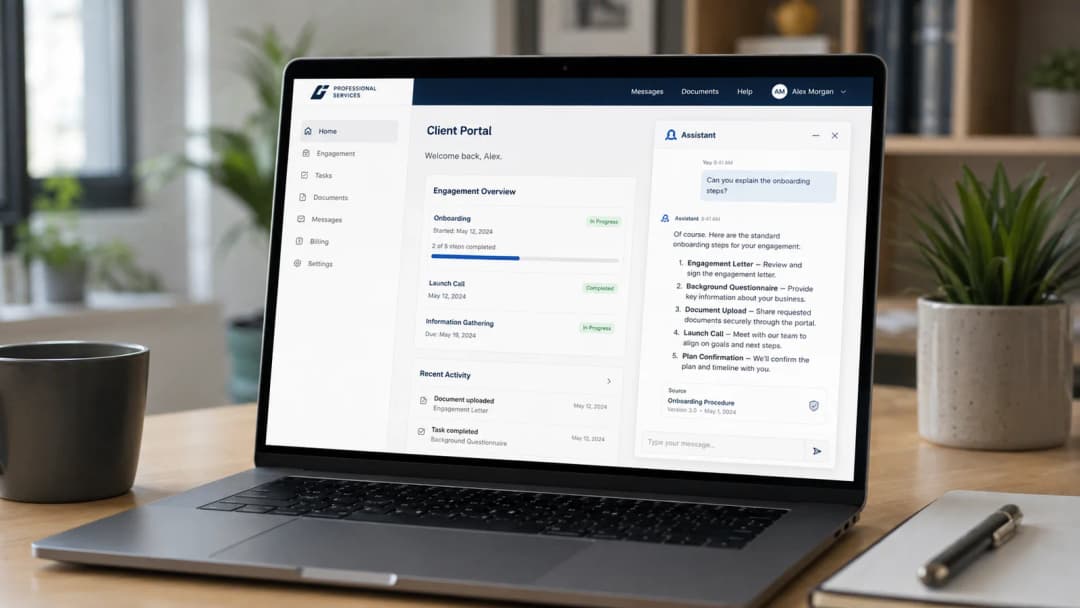
Building a self-service client experience with a branded assistant

A consulting firm answers recurring client questions around the clock from its own guides, in its own tone, without pulling the team off client work.

The problem

Questions about process, timelines, and required documents each triggered a round of back and forth, interrupting work that needs concentration.

What we built

A branded assistant embedded in the client portal that answers from the firm's onboarding guides, FAQs, and delivery policies.

What it does

  • Answers recurring client questions in the firm's own voice
  • Hands the conversation to a person when a question needs judgement
  • Gives every client the same account of how the firm works

Read the full case study: Building a self-service client experience with a branded assistant

Financial services

Always-on client support from a firm's own documents

A wealth management firm gave clients a knowledge hub that answers routine questions from its own service guides and onboarding material, at any hour.

The problem

The same client questions about services, timelines, and document requirements landed on the support team, and answers outside office hours waited until morning.

What we built

A client-facing assistant on the firm's portal that answers from its service guides and FAQs, and escalates to a person when needed.

What it does

  • Answers routine questions outside office hours
  • Escalates to a person when the question needs judgement
  • Gives the same answer across every client segment

Read the full case study: Always-on client support from a firm's own documents

Professional services

Standardizing proposal writing across a distributed team

A professional services organization with teams in several locations put the steps, templates, and approvals behind a proposal in one place, answerable in chat.

The problem

Proposal steps were rarely written down in one place, so a team spread across offices wrote the same proposal a different way each time.

What we built

A workflow assistant in Slack and Teams that answers process questions from the firm's own procedures, templates, and policies.

What it does

  • Replies with the steps, the template, or the person to escalate to
  • Shapes the answer to the role asking
  • Gives every office the same answer to the same question

Read the full case study: Standardizing proposal writing across a distributed team

Financial services

Answering internal process questions through a chat assistant

A financial services team made onboarding steps, approvals, and escalation paths answerable in chat, drawn from the firm's own procedures and checklists.

The problem

Internal processes sat across documents, email threads, and unwritten knowledge, leaving the firm dependent on the few people who knew the answer.

What we built

A chat assistant inside Slack and Teams that answers from the firm's procedures, handbooks, and checklists at the moment a question comes up.

What it does

  • Answers process questions from the current procedures
  • Shapes the answer to the role asking
  • Logs recurring questions, which shows where a process is unclear

Read the full case study: Answering internal process questions through a chat assistant

See what this would look like in your firm

Tell us which workflow costs your team the most time. We will tell you whether it is worth building, and what it would take.